I started working on a new comic this week, and I’m very excited about it! It feels good to have a project going. It’s more directly personal than my previous books, and that’s going well. I was worried at first that it would be hard in some way to be so direct, but it really hasn’t been. I mean, it’s not like that’s ever stopped me from writing any of the things I’ve written on this blog. Once I get going, I am in the zone and moving along fine. It took a while to get started because my anxiety took over in the planning stages. I want to find a way past that more consistently, so that I can work on more books. It really is just a fear of presumed pain and hardship, rather than actual hardship. And another thing that reading Black Cat has reminded me is that no one requires you have the perfect, best possible book before you get published. Pros put together what they have the best they can, and sometimes the better idea comes later, or people like enough of what’s there to keep coming back. Like they say, it’s never finished, so just find a place to be done.
This week, I also want to talk about shared movie universes, and how it’s a bad idea that everyone wants to make them. I could have saved this for next week, but I didn’t want to tap out of writing something new; this is a top of mind blog. I also had to react to Secret Invasion this week, because WOW, so double-booking it is!
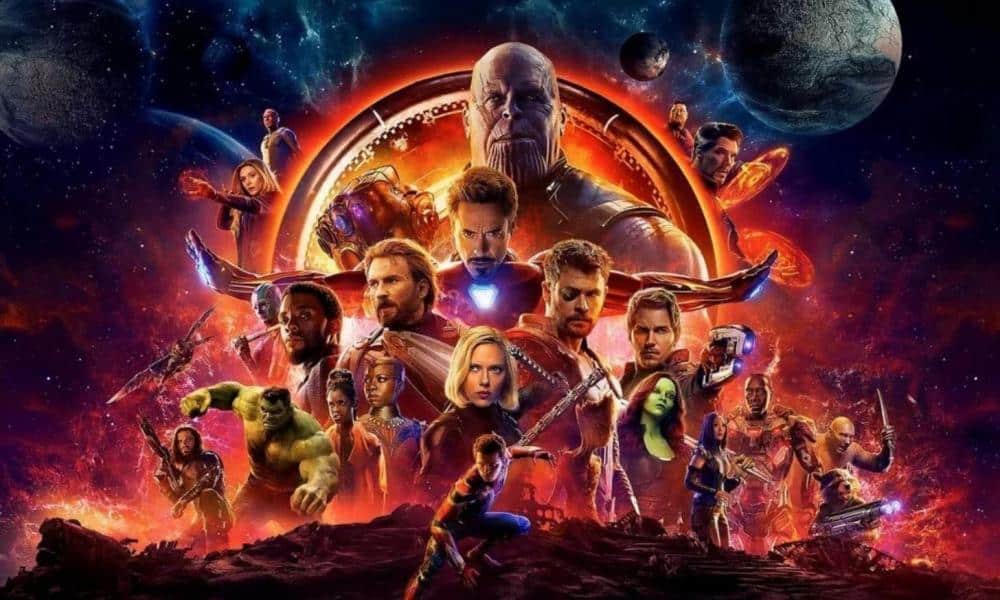
So first off, let’s talk about what a shared cinematic universe is. In short, it’s a group of movies and movie series that are all written to take place in a single overarching narrative setting; as a result, they share history, can trade characters between movies, and can produce larger crossover movies where multiple protagonists come together to go on an adventure. So far, the most famous example of such a project is the Marvel Cinematic Universe, which consists of a group of movie series, solo movies, and crossover movies starring superheroes from the Marvel Comics universe, as well as some affiliated TV series. At the outset, Marvel Studios wanted to create such a universe, but obviously couldn’t foresee the level of success they would have with their movies. Their first five films were made as essentially stand-alone movies with references to how they exist in the same world. Each film ended with a post-credits scene that teased the idea of the heroes coming together, or teased the next movie on the release schedule. The Avengers really sold the idea of this being a true shared universe in the modern sense, by having the heroes introduced in the first five movies come together to form a team to fight a common enemy too big for any one of them alone. Since then, Marvel Studios has released sequels to their existing films and new films for new characters in groups called “phases,” each culminating in an Avengers movie to bring a conclusion to the larger world narrative. In effect, the crossover Avengers movies act like a sequel to all the movies that came before it since the previous Avengers movie. It should be noted, though, that the “overarching narrative” each Avengers film works through isn’t actually something you see in each individual film and must know to get any of the movies; it’s more like an answer to shared themes and easter egg moments that work fine out of context/can be ignored with no consequence. If you don’t want to watch all of them, or you don’t want to watch the Avengers, then you won’t be missing out on some grand design that’s essential. The overarching narrative is only really visible in the Avengers movies.
The basic formula hasn’t really changed since the beginning: Though sequels, as they should, expect you’ve seen the previous films of that series, and the Avengers movies, as they should, expect you’ve seen at least some of the other movies, each film and film series functionally acts as a standalone project, with connective knowledge being a bonus rather than a requirement. Further, the sequels and crossover movies do a lot more than critics give them credit for in bringing the audience up to speed, even if they don’t do all the heavy lifting on that end. Because, why would they? They’re sequels, and you generally have to see the first movie to get what’s happening in its sequel. I’m not great at examples, so bear with this terrible one that I’m pretty sure doesn’t work: If you watched Terminator 3 and complained that they don’t explain any of this John Connor stuff, you’d be laughed at for going to the third movie in a series and expecting it to tell you everything from the past. Why would the MCU be any different? But like I said, they also don’t require you watch every other movie to understand the basic plot or characters of all the movies. I genuinely think they do more work to keep them new entrant friendly than is commonly opined on Xwitter, especially the ones that aren’t direct sequels or Avengers movies. You can catch the ones you want, and not “miss” anything major, at least not until the next crossover. At that point, you can either catch up on the important one you missed, ask a friend for a refresher, or look for explainer videos and the like. If you don’t do those things, then you’re the one being unreasonable, not the movies you aren’t obligated to watch. I get it if you feel like there’s too much going on now, or you want to check out and ignore it, or you just prefer that movies have distinct beginnings, middles, and ends. It’s admittedly not for everyone, and the social pressure for it to be is annoying. I would prefer if they could make genuine progress instead of spinning their wheels for the status quo, and I think corporate media trying to take over our collective imagination is a problem. They should be marketed like they’re regular movies, not the “greatest experience of our lifetime.” I just want to make clear that all the connective elements are a feature, not a bug.
So, if it can be as fun as I’ve said it is to watch movies where your favorite characters jump around together between movies, why is it bad for everyone to do it? Mostly because it’s a difficult task that isn’t necessary and can easily distract from the movies you are making, both in terms of public perception and your own filmmaking. Hollywood is currently controlled by a class of artless MBA bros who don’t get and maybe don’t even like movies, and all they know and care about is money. They’re scared of going out of business to Netflix, which they view as an inherently better product, so they’re trying to save themselves by banking on guaranteed billion dollar return franchises that print money and require they just make one movie over and over. The MCU is the obvious model they desperately want to emulate, and they only maybe understand the basic concept of the movies happening in the same world. They think if they do that, or say they will, it will generate the same kind of media hype as the MCU, which will translate into the same level of profit, no matter what movies they actually make. Because they’re not very good at business and don’t know movies. It’s similar to how every tech company is claiming to do AI, right after they all claimed to be doing the metaverse. Did you hear about Mattel wanting to make a shared universe of toy movies, including Uno and Magic 8 Ball? Complete nonsense. And when they set this goal, they set a lot of expectations. First, there’s the fact that, especially after a couple decades, I don’t think many people actually want another MCU to deal with (or at least enough people don’t want it for it to be a significant factor), so people bring that to the table. They don’t go in to watch one movie, but the first seed of a larger narrative, which greatly impacts how they think of the movie. And if you’re a sweaty studio exec forcing your creatives to make everything like the MCU, you’ll keep telling them to put in all this extra stuff that distracts from the movie and makes for a really bloated, unfocused narrative.
I say all these things because that’s what happened with the DC Extended Universe (DCEU), the Sony Pictures Universe of Marvel Characters (SPUMC, the real name they had for a while), and the Fox X-Men movies, to some extent. The DC movies were being made explicitly with the idea that they were going to do an MCU, and so Man of Steel, BvS, and Justice League were all made with this top-down view in mind. They couldn’t simply make a Superman movie to be a Superman movie, and they couldn’t patiently make movies for their other major Leaguers before doing a crossover. Among other reasons *cough* Zack Snyder *couch*, this is why those movies weren’t very good. The more successful ones, like the Wonder Woman movies and Aquaman, basically ignored the idea of it being a shared universe, and having to do so to be good isn’t a good sign for a shared universe. A similar thing happens with the Amazing Spider-Man movies. The first was decent for what it was trying to do. The second one could have just been a Spidey v Electro movie and been basically fine (for what it was), but they inserted and greatly accelerated the Harry Osborn story and threw in a fight with the Rhino in the post credits in an attempt to birth a shared universe with a Sinister Six movie. Like BvS, it fell under that weight. Since then, the other movies in that world are pretty all over the place and it’s not clear what’s happened or who exists in their world. It’s a whole cast of Spider-Man characters operating without a Spider-Man, but maybe there is one, like Vulture referred to? And for some reason MCU villain the Vulture is there? That kind of continuity messiness is more apparent in the Fox X-Men movies. The first three are a clear series of movies, but after that, each movie they make either exists in one distinct trilogy or is off on its own. In terms of what has happened when, and which version of these characters was present and knows what’s going on, it’s not that clear. Someone who’s more into them than I am can probably explain it; I know there’s (at least) two timelines, but I don’t know which one is the Wolverine movies, or if Deadpool is either of them. In terms of making a single cohesive movie narrative, they don’t do very well, is my point.
Marvel isn’t the only successful example, though. The Arrowverse on the CW is a shared TV show universe that executed the idea of a shared universe fairly effectively. There were times when it didn’t do as well, like when the fourth season of Arrow tried too hard to set up Flash stuff and the eventual Legends of Tomorrow show, but for the most part it got the assignment. Each show was a standalone show, they would give you a decent gist of who people were from other shows (at least for a while), and they occasionally did crossover stories using episodes from each show that aired the same week. While the quality of shows varied greatly, and they started playing faster and looser towards the end, it was overall a successful example of a shared TV universe. Though I’m not happy with how all of the films have gone, the Legendary Monsterverse of Godzilla films has successfully operated as a shared universe, albeit a small one. There’s the Godzilla films, Kong: Skull Island (the good one), and technically also a couple limited comics series. It’s Skull Island that really makes this a shared universe, as opposed to a Godzilla trilogy. The shared Godzilla movie universe I’m most interested in is, of course, the original Showa-era Godzilla movies from Toho. Though they’re mostly known as a series of sequels in a long-running Godzilla series, it’s actually the first successful shared movie universe. Multiple monsters, like Rodan, Mothra, and Baragon, first appeared in their own standalone movies, and were then introduced to the Godzilla franchise. Baragon is a great example. He first appeared in Frankenstein Conquers the World, which spawned the sequel War of the Gargantuas. Though neither Frankenstein nor the Gargantuas would appear in the Godzilla franchise (at least, not in the flesh or in the Showa era), Baragon and the maser weapon introduced in Gargantuas both do, creating this bubble of story at the side in a similar way as the Netflix Marvel shows. These Godzilla movies were not being made with the modern idea of a “shared universe” in mind, and they show it; Godzilla sometimes had different powers or behaviors in one movie than another, and the films were made basically as standalone movies that vaguely happen in one world with no overarching narrative and a flexible canon. They were not banking on anyone having seen all of their movies and had a lot of fun with the wiggle room that gave them.
All of these examples do the actual successful formula Marvel has been doing: You make one good thing, then you make another good thing, and eventually you put them together, and if that works, you keep making other good things that exist on their own and sometimes overlap. It’s not rocket science. You have to make movies and shows that are good on their own, let the crossover project do the heavy lifting of the “shared” aspect, and genuinely want to make the good things for their own sake. That’s why the only new shared movie universe I’m looking forward to is the World of Godzilla that Toho is planning to put out. They did it first, and now that people are used to the MCU, they’re going to do it again. They would know how. And with modern movie technology, they can make the kinds of serious, high impact movies they could only dream of when they released Gojira in 1954. Seriously, Godzilla Minus One looks amazing! I’m assuming that’s the first movie of the World of Godzilla, at least; they didn’t formally announce that in the press, but it is the first one since 2021 and is a new beginning type of movie.
That’s Japan, though. Hollywood needs to cut it out. They need to start making good movies for their own sake and settle for solidly successful films with lower budgets. I agree with the critics that the way the mega-franchise is taking over Hollywood is bad and annoying, but the thing of it is that Hollywood is still making great movies outside of franchises. They just don’t champion them. We had movies like Nope, Bullet Train, the Menu, Puss-in-Boots: The Last Wish (I know technically a sequel, but it kinda isn’t), Renfield, and M3gan over the past year, and they’re all amazing. A few of those got decent marketing, but nothing on the level of a Marvel movie or one of Disney’s soulless live action remakes. Imagine if they did. Imagine if studios believed in these movies, stood behind them, and honestly assessed their critical and financial success. They’d (hopefully) come to the conclusion that making a lot of great movies for their own sake and for far less money apiece would net them a steady and respectable profit. People would like studios more than they really deserve and talk about all their favorite movies, not just the ones artificially pushed to the top of the social media algorithms by multi-million dollar marketing campaigns that drive us all insane. It’s, you know, the viable and time-tested business model that existed before the 2010s. Imagine that. Netflix didn’t change what makes good business sense; Netflix is a scam built on the myth of an infinitely growing subscriber base that’s slowly reinventing the concept of an ad-supported cable studio, but with worse relations with their talent and crews. Don’t pay attention to them. Movie studios are supposed to be the big kids who show cute little streamers how it’s done, right?
And besides all that, it’s just not sustainable. Not every movie studio can have a franchise that commands the same kind of attendance and returns as the MCU. Could you imagine if they did? There would be at least twenty movies a year treated as socially-required viewing. You would be expected to see some of them multiple times, watch them on streaming, and buy a bunch of their Blu-rays. The merch on top of all that! And the level of marketing, if it matched the MCU, would be completely intolerable. That’s what every studio would expect for all of their shared movie universes, whether or not they’re actually making good movies. They think we’re just mindless piggy banks to roll into different screening rooms so they can keep getting the last of our coins. There simply isn’t enough money, attention span, or interest to sustain so many shared universes. I think DC has a shot under James Gunn of establishing a second successful one that people would show up for; they’ve been making a movie or two a year anyway, and people have been showing up for those. If they get up to an MCU pace, that would be another two or three movies a year for shared universe franchises, so four to six altogether. I’m not sure a third shared universe could be sustained, let alone a fourth. Not everyone wants to watch them, and everyone wants to also see other movies. There’s only so much room, you know?
So sure, let Marvel Studios and DC keep doing what they’ve been doing – I don’t think blockbuster franchises, whether shared universe or not, are inherently evil – but every other studio needs to go back to focusing on a bunch of cool, good movies. Instead of complaining that no one is coming to see original movies, they could actually promote them, and define “people going to see their movies” with more realistic expectations. Not everything has to be a billion-dollar return or needs a $300 million budget.
Weekly Thoughts 7/29/23 the Second
 Life in the Gutters