I finished reading End of the Megafauna by Ross DE MacPhee. It’s fascinating stuff. The part that’s really sticking with me right now is how, in describing the possible role of ecological collapse in the megafaunal extinctions, he said that we can’t use our current ecosystems as a model for Ice Age ecosystems because they’re less complex. I hadn’t really thought of our current ecological situation as having empty spaces before, that our world is missing something; we came up after a mass extinction event, and animals have yet to recover. Makes me wonder if we’re either overfilling several niches and/or preventing niches from being filled through our activities, and if not, what animals could we expect to supersize in the future. My money’s on pigs, with the current boar population expansion and their versatility. Instead of speaking to that, the epilogue “Can the Megafauna Live Again?” was about trying to bring mammoths back with genetic engineering and possibly reconstructing older ecosystems through the reintroduction of species to old habitats, a plan he referred to as “Pleistocene Park.” And like, we’ve seen the movie. I know I shouldn’t want to do Pleistocene Park, but also we should definitely do Pleistocene Park, right? Don’t you want there to be more elephants across the planet? Maybe, if we expand the range of the cougar and get them to hunt buffalo, they’ll evolve saber teeth! And maybe, in a strange way, it can be a part of fixing the damage we’ve done to the planet, by working to reconstruct lost ecosystems. We should probably start by reconstructing cities to be inclusive of nature, instead of as interruptions, but Pleistocene Park is a close second. We should also probably let the indigenous peoples of the areas we’d be trying to transform decide if they want to do that, after we give them that land back.
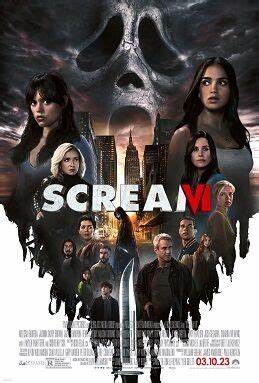
This past week, I watched the Scream movies again, and they’re just great. Truly, a great series of movies. It’s easy to get lost in all the meta cheese, and (no offense to the actors) the performances don’t “scream” Oscars. Underneath all that, it’s got some incredible character work, a consistent and evolving set of themes that play on both horror tropes and American culture, and some really great set pieces. A little element I always like is that the Ghostfaces are always really good at planning and setting up creative and terrifying attacks, but when the moment to kill comes, they stumble and struggle a good bit first. It really speaks to the idea that these are just people, not supernatural predators. They make a big deal about the “rules” of movies throughout, but for them, it’s just life, they’re all human, and art imitates life imitates art.
The most fundamental theme throughout is sexism, through the lens of women being portrayed as both victims and perpetrators. From the beginning, Sidney’s life was defined by being an orphan and a suspect in the Ghostface killings. Every time she was attacked, her “fame” as a victim of a serial killing spree fanned the flames on her suspected status as a Ghostface in the next attack. Her mother Maureen was being ridiculed in town for her promiscuity, which in itself isn’t a crime or sin; her adultery was, within her marriage, but she was being condemned for sleeping around rather than breaking her vows. That scarlet letter was so powerful a symbol of sin – the primary sin for which women in horror are killed – that Sidney refused to accept it, and she continued to struggle with it until the third movie. Although you can see Sidney trying to come to terms with her own sexuality and that of her mother as a normal, healthy part of life, she retains intimacy issues of various kinds and frames her mother’s promiscuity as negative actions she took that led to the Ghostface killings. At every level, both Sidney and the world can’t help but blame herself and her mother for a series of murders neither committed, because they had sexual appetites. While the framing of Maureen’s promiscuity in the third isn’t ideal in terms of making general statements, it is a great way of closing out the theme of the victimization of women by way of sexuality. They’re just people, and sex has historically been used to express power and force them into subservience, partly by leveraging sex from them and partly by painting them as villains if they freely act on their sexuality. It also connects well to Sidney’s continual accusation of being Ghostface by reinforcing the theme of reconstructing past traumas as a coping mechanism.
The transition into Sam and Tara works really well, too. For Sam, the Ghostface accusation predates any charge against her sexuality, and in doing so more greatly focuses on the way abusers victim blame as a way of justifying their own actions. At the same time, having Tara as a secondary lead continues to examine cycles of victimization; she’s attacked first because of her sister, who ran away from the family, and then distances herself from her sister in a failed attempt to move away from the trauma that she’s intimately connected to. These more recent movies also have the highest number of suspected women Ghostfaces, with all the accusations made against women based on the idea that their identity as women in this context made them somehow defective or aberrant. Amber was possessive, because close female relationships are suspect; Liv was boring, meaning she was either hiding, getting attention, or proving people wrong; Mindy was the expert, and so “obsessive” and likely to recreate her gender nonnormative interest; Anika was the love interest, a role women often fill as if it’s enough to justify a character; and Quinn, once again, was promiscuous, a stereotypical and typecast role for women in horror and society. Gale comes up in all of them after the first for being ambitious, which is also sexist.
I saw these movies as a group well after they came out, and that often ends up being an interesting position to see movies like these. Everyone else saw them and formed a popular opinion that has shaped perception in the years since. I think they’re all great and see how they build off of one another, but I took a long time getting to them because I heard growing up that they’re bad, trashy movies. I now know that’s because of the negative reputation the third and fourth Screams got, and I find that really funny and aggravating. The third being panned is a common response in movie trilogies, and happens often with sequels in general; Randy says, “sequels are inherently inferior products,” which references audience perception much more than the actual result. Like, the Matrix sequels are often dumped on way more than they deserve. They’re not perfect movies, and I’m not saying they really were better than the first; I’m saying they’re so harshly judged because no sequel can make a bigger impact than The Matrix because it was such a game changer, not because their faults were that great. So while Scream 2 was well-received, the third got panned and the fourth couldn’t recover; only a new cast and new context, provided in the fifth, could change the scenery enough to make a difference in perception.
I think that in terms of action, set pieces, the way the story and lore built up, how the themes evolved, and the increasing level of meta cheese, the second and third films are essentially equal. The characters in the original didn’t talk about the nature and rules of horror movies nearly as much as in any of the sequels, and you’d be hard-pressed to say it was somehow more detrimental, if at all, in the third than the second. The fact that it takes place on a movie set only enhances the meta nature of the movie. I think audiences usually aren’t satisfied with knowing the answer to a mystery, because whatever they thought it was is better in their minds than whatever the author provides. By the time the fourth was made, people weren’t ready to forgive, so it never had a chance.
Which is where it gets really funny and annoying, because the fourth and fifth movies are very similar in so many ways. The basic pitch, that a reboot is the next step for the series, is the same, and in both cases the conclusion of the meta narrative is correct; the fourth said that audiences reject reboots as “killing” the original thing they loved, which happened, and the fifth said that requels are a somewhat silly vehicle for rebooting a franchise that studios move to so fans will accept change, which happened. Like, if anything, the fifth had the weakest villains of the franchise, since the killers were literally motivated by movie fandom, which is totally insane and goes outside the general premise of the series; it effectively hides and delivers a powerful narrative about toxic relationships that underpins the whole thing and furthers themes about the victimization of women and their sexuality, but compared to the fourth’s desire for her life to feel like it’s about her instead of her well-known cousin, it’s outwardly weak. Seriously, the fourth was a great movie about how reboots are ultimately a failed attempt to move backwards because studios are too afraid or lack the creative vision to move forward, and the popular reaction was, “Yeah, we hate this and all reboots, how dare you,” before accepting a reboot that included the most meta cheese of the entire series. The fourth could even be described as a requel, since they were trying to move towards a new main character related to past characters and brought in legacy characters, who were on the chopping block, to round out the cast; the only thing it didn’t do was follow through, because, to its credit, it didn’t intend to. I try not to blame audiences or say people are dumb, but this feels like an obvious failure of our education system to teach people to evaluate art critically.
Of course, this is why the sixth stands at the top. In the rest of these movies, the rules laid out by the expert are correct, but they’re not in Scream VI. There’s a worthwhile argument to be made about whether or not it’s correctly positioned as franchise movie, because there’s no formal limit to the number of sequels a series can have, there’s no reason this movie in particular bumps them into franchise status, and the Scream series lacks hallmarks of some modern franchises such as related movies outside of the central series. But that aside, the movie makes good work of disassembling audience expectations and showing the mechanics of a franchise for what they are. Most franchises thrive on the idea of subverting expectations, because they have to keep their audience satisfied that it’s not the same movie over and over, when that’s often what they make; Scream VI is very similar to past movies, and is in many ways just another sequel. George RR Martin popularized the idea that “no one’s safe” as a way to keep the story fresh, even though killing off main characters for shock value is a tired idea and, ultimately, the characters that have to survive by the end are always safe because that’s how stories work; in Scream VI, all the main characters survive, with only one easily foreseen casualty named among the heroes. While the prediction that the new killers would be the opposite of the previous killers was true, that’s not hard to predict; any murderer with a realistic and plausible motive would be seen as “the opposite” of radicalized movie nerds. The stated rules of a franchise don’t apply here because they aren’t the real rules of movie franchises, and it succeeds because not following the stated rules is how you make good movies on their own merits, the thing a franchise actually needs to succeed.
I said I watched all these the past week, but I didn’t, because Scream 4 isn’t currently on Paramount+. Like, why remove just that one? It’s a good movie, and no matter how popular it is, you have the rest of the series available. Without it, you don’t know what’s up with Sherriff Hicks in the requel, or know the significance of Kirby in the sixth, you know? It seems pretty silly. Paramount+, please put Scream 4 back on your service.
Weekly Thoughts 8/26/23
 Life in the Gutters