It’s interesting how insisting that humans aren’t animals, that we’re some higher being, actually dehumanizes us. I don’t have all the thoughts in order, but it occurs to me that the reason those in power, and too often we ourselves, can treat people like machines is because we think of ourselves as being centered on a mind, which is a higher spiritual entity not limited by physical needs. So like, “there’s no reason we can’t work unlimited hours in service jobs, your brain is always working anyway,” or, “poverty and extreme need don’t factor into the actions you take because you’ve been told the higher moral rules that your soul is judged by.” We insist that adults don’t need to play and have fun partly because children are closer to animals, and by growing up, you leave that behind. Stuff like that. It’s easier to treat people like machines if you say their bodies and minds have no physical limitations because they’re separate from nature.
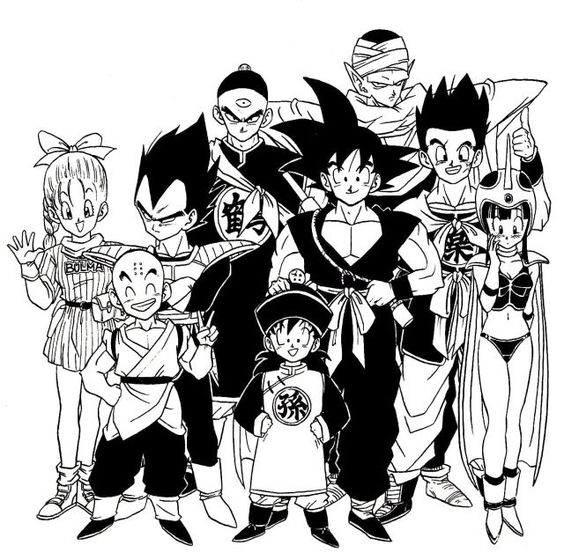
I am bowing my head for a moment. This week, we learned that Dragon Ball creator Akira Toriyama died on March 1 of this year. I have not seen any information about how he died, though I feel better having not seen headlines about murder or a car crash. I’ve talked a lot on here about Dragon Ball and the importance it has in my life; a further testament is the Dragon Ball fanfic I have posted on this site. I grew up with his work, and its helped me to learn and grow as a person. I know there are millions more out there who feel the same. Several of my friendships were either founded or deepened by having Dragon Ball to talk about. That series alone is a global phenomenon that stands as one of the most iconic stories ever produced, without getting into the ever-popular Dr. Slump or the video games he helped develop, Dragon Quest, Chrono Trigger, and Blue Dragon. He will be remembered for decades to come, and his work will continue to inspire and entertain for generations.
Ever since I was a child, I recall having Dragon Ball around me, in the mix with Batman, Spider-Man, Pokémon, and Godzilla. It’s always had a huge influence over me. The two reasons I started taking martial arts lessons at age 5 were my brother and Goku. It was so exciting to think that I could learn to do anything like what he was doing, you know? I still think about karate class most days, and those lessons stick with me in many ways. It helped teach me how to move my body, how to be conscious of what I’m feeling and the effects it has on me. I still tend to walk quietly after learning how to do it silently, so people often tell me I sneak up on them. Learning martial arts taught me to think about things in terms of injury, rather than hurt or pain, and that’s had a huge impact on me. There’s a lot in it connecting biology and morality that’s been important in my life. All of this was filtered through and reinforced by Dragon Ball, which is anchored in traditions of Eastern martial arts and the interconnected mythos around it.
I watched some video (or maybe read an article) about the Buddhist philosophy of the series, and the quote that sticks with me from that is, “Allowing others to be hurt because you refuse to use violence is not nonviolence.” Of course, the “nonviolence” spoken of here is more like pacifism, and it’s a view that your personal desire not to hurt others isn’t a moral stance if it causes you to allow others to suffer when violence may be necessary. It’s an idea I remember from class, that when defending yourself, you only do as much as you have to; “you hurt, but you don’t injure; you injure, but you don’t maim; you main, but you don’t kill; and you should never have to kill.” And it’s something that you see Goku live out during the series. Even when fighting the most powerful and dangerous people in the universe, he always pleads with them to change their ways and go on with life. He never wants to hurt or kill his enemies. And yet, he’s a lifelong martial artist, whose entire skillset is devoted to attacking others. For him, fighting isn’t about hurting an enemy, causing injury, or proving his dominance over others. It’s a challenge to become better than he used to be, not only at fighting, but as a person. Toriyama was always great at linking Goku’s strengths and flaws as a character to his growth as a fighter. Goku was never a complex person, with his one-track mind, but he still found a way to improve in all aspects by truly appreciating and understanding what he had.
Dragon Ball has also had a huge impact on me artistically. I’ve always wanted to make a story like it. and the various ideas from the series pop into most action-adventure ideas I have. I think I have a really good one right now that I’d love to work on, and one day I’ll be equipped and ready to bring it to life. I gave the characters in that story last names from comics artists that I admire, inspired by the Dragon Ball tradition of giving everyone a food/pun name, and the main character’s last name is Toriyama. There’s no more impactful artist for a martial arts story, no more appropriate namesake for a simple, hard-working protagonist. Akira Toriyama is where it all started, and especially now that he’s gone, I want to keep his memory alive in my own work.
It’s hard to put more into words about what Akira Toriyama’s work has done for me, so to close, I want to paint you a picture of the impact Dragon Ball has had on the world. The anime continuation Super was being released during the pandemic, specifically the Tournament of Power storyline. It was a time when people couldn’t live their normal lives, they couldn’t connect with their communities as they did before. In order to create safe community activities for people, some towns in Mexico held viewing parties for the anime in public parks, projected onto large screens. There were posters put up advertising the upcoming fights like boxing matches. It’s incredibly moving to watch a small town roaring with excitement over a show you grew up with, to watch them chant “Frieza!” when the longtime villain steps in to help win the tournament. In another culture, far away, in a time of deep sadness and isolation, this simple yet complex and endlessly entertaining story of martial artists pulled together entire communities and gave them a sense of excitement and hope. Akira Toriyama, who made it all happen, will be sorely missed, but he will never be forgotten.
Weekly Thoughts 3/9/2024
 Life in the Gutters