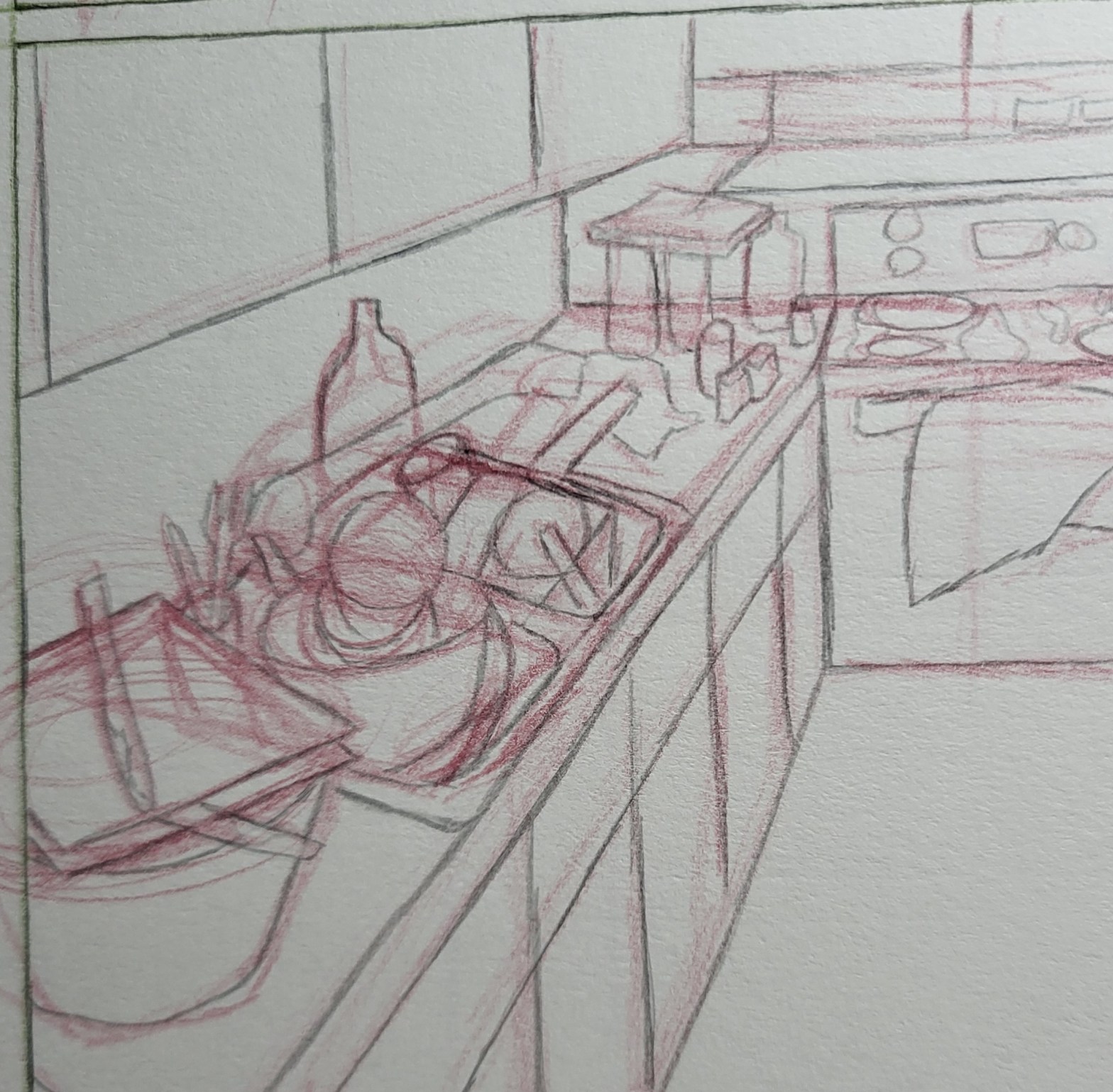
I hit a snag in the last few pages of the chapter of my comic I’m working on because I made the mistake of thinking I didn’t have to write any notes about it. I really hate whatever impulse that was. Always write down all your ideas. There’s no harm in overplanning if you’re also ok with throwing the plan out the window when a better idea comes along. So I’m making it through, and hope to be starting on the final chapter in the next week.
This is week two of my series on the Heisei era Godzilla movies, where I discuss what I would do to align the latter majority of the series with the more serious tone set in the first two films. Last week I talked about how I would streamline Godzilla vs. Biollante, because the messiness and poor reception of that movie led to a swift change in course with this week’s topic, Godzilla vs. King Ghidorah. Oh, and I have a quick trivia thing about how these movies are designated. Japanese history is divided into different periods based on the emperor in power. We are currently in the Reiwa period, which started in like 2019. The Heisei era Godzilla films technically started out in the latter years of the Showa period, but the majority happen in the Heisei period, hence the term. The third series of films, the Millennium era, were also made in the Heisei period.
Anyways, to understand my thoughts on this week’s movie, I will describe the plot first. The movies starts out with two lines of story. A reporter uncovers the origins of Godzilla as a dinosaur that saved Japanese troops on Lagos Island in 1944, which was later mutated by radiation from H Bomb tests in 1954; at the same time, people from the future of 2204 arrive in 1992 and make a deal with the Japanese government to use time travel to get rid of Godzilla by removing the dinosaur from the island. According to the future people, Godzilla will destroy Japan with his own attacks and the release of nuclear waste. They remove the dinosaur from Lagos to the Bering Sea, but the future people leave behind genetically engineered pets called Dorats. The Dorats get blasted by the radiation instead, fusing and becoming King Ghidorah, who the future people can control in 1992. The future people are actually from an organization that wants to equalize the power of all nations (???), and want to stop Japan from becoming so rich and powerful that they buy all of Africa and South America. There’s some subterfuge with a defector from the future helping 1992 revive Godzilla so he can fight Ghidorah. This plan succeeds in giving Godzilla a growth spurt, because after they moved the dinosaur to the Bering Sea in 1944, a Russian nuclear sub crashed there in 1954, creating Godzilla anyway. Godzilla is able to beat Ghidorah as the good guys beat the evil future people. Then the good future person promises to revive Ghidorah in 2204 and bring him back to kill Godzilla in 1992. This results in a battle between Godzilla and the cybernetic Mecha-King Ghidorah (the main reason this movie is liked by fans). MKG ultimately gets destroyed, but is able to severely damage Godzilla and bring him to the ocean. Everyone declares this a victory, and Godzilla revives underwater.
So, a lot going on there. This was the plot they put together to revive interest in Godzilla using a famous and popular monster. A monster who’s famously an alien and usually requires multiple monsters to defeat (uninjured, by the way; Showa Ghidorah never suffered a wound). Separate from how the time travel plot is contradictory, there’s also a surprising amount of nationalism in the movie, what with the disaster being Japan not eventually buying half the planet, and how they say Godzillasaurus saved the men who would go on to rebuild the country. As we all know, Godzilla movies are always about how the military is good and imperialism is the desired path forward, right? Nothing sketchy about that. That nationalism is tied to a weird rewrite of history with Godzilla, where the people of 1992 can’t imagine Godzilla destroying them and see Godzilla as a savior, misunderstood or otherwise, before his growth spurt “turns him evil.” There’s also brief concern over nuclear waste and the potential long term dangers of relying on nuclear energy, as Japan does, but the nationalism sweeps that under the rug.
The first thing to note is that this rewrite exists in relation to my Biollante ideas. In the movie, Godzilla was recovering from ANEB in the waters off the coast of Japan. Since I established that no one made ANEB in my version of Biollante, that’s not a factor here. Second, I would fully reframe the time travel story, since there are too many holes (why would Ghidorah only appear in 1992 despite being born in 1954, for instance). Part of how I would like to rethink this is to use an idea from the novelization of this movie. There, it is said that the Dorats weren’t genetically engineered from scratch, but rather were based on the DNA of a dead Ghidorah found on Venus, thus making Ghidorah an alien again.
The people from the future arrive in 1992 to tell Japan about how they’ll go further back in time to prevent Godzilla’s birth. By their time, the age of monsters that Godzilla is about to usher in has devastated the Earth, and they hope to stop it all by stopping Godzilla. A team of theirs led by Emi Kanno goes back in time to do just that, and we see the Godzillasaurus story, with the tweak that the smaller G attacks the Japanese troops as well, just so it’s clear he’s not a savior figure. At the same time as this, Miki Saegusa is going around, helping the military locate and destroy Biollante spores. She’s interviewed by the reporter about this work. During the interview, Miki starts getting intense psychic visions of a new threat awakening. She says she’s been feeling it more and more lately, and now it’s finally rising. Because of the time travel stuff, the government isn’t listening to their ace psychic about a new monster; they’re too focused on getting rid of Godzilla.
The Lagos Island team returns and declares the mission a success, but Emi is confused when 1992 looks the same. The other future people reveal that they never wanted to stop Godzilla. They knew that time can’t be changed, as they had promised Emi and the people of 1992. They knew all along that Godzilla would be born from some other source no matter what. Instead, their plan was to hasten the revival of Ghidorah, who was resting near death under Lagos Island. By removing the Godzillasaurus, there was nothing else to absorb the radiation, and so it all went to Ghidorah, whose regeneration was accelerated by the energy boost. With their future tech, they are able to take control of Ghidorah as he wakes up, before he gets his wits about him, and use him to take over the world.
At around this time, Godzilla has come back to Japan, looking to eat a nuclear reactor to finish his recovery after the fight with Biollante. Just before he gets there, Ghidorah shows up and they get in a fight. Godzilla nearly loses, but Ghidorah blasts through the reactor wall, and Godzilla recharges on that energy. He then deals a devastating blow to Ghidorah, severing his middle head and throwing him back into the ocean. We can have a similar back and forth battle with Emi against the evil future people, but I’m torn between it having the same ending or Emi teaming up with Miki to get them attacked by the last Biollante spore in Japan. If the former, then Emi has to fly the future ship to the battle and dramatically escape.
After this, Emi promises to make up for the horrible misdeeds of her companions. She goes back to the future, and the people of Japan start rebuilding. Godzilla comes back sooner than expected to attack another nuclear plant. Before he gets there, Emi returns with Mecha-King Ghidorah, hoping to defeat Godzilla with the more advanced tech. I would give MKG more stuff to be a bigger battle, like a force field and missiles; MKG should be a bigger deal, and otherwise has fewer battle abilities due to the difficulty of using suit/puppet Ghidorah in physical combat. In any event, it’s a long and difficult battle that ends with Godzilla’s victory. Emi has the battered MKG grapple Godzilla and drag him deep into the ocean, hoping to trap him for some time. Godzilla is unable to get out of the binds, but does separate from MKG before falling into the water. Emi then leaves, saying she has left a gift to jumpstart established history, just like her evil friends did, but this time to help Japan.
I think this version of the plot does a few things that are important. First, by acknowledging that history can deviate but won’t actually change, the time travel plot is streamlined and ends with foreshadowing what happens in later movies. That’s something time travelers should do. It’s also a simple and vague enough foreshadow that I think it’s reasonable to think they could have written it into this movie before they knew what other movies they were going to make. The motivations of the time travelers make more sense as more out-and-out villains, rather than political equalizers or whatever anti-UN hogwash that was. It’s much more in line with the history of this world for Godzilla to always be the enemy.
There’s potentially room to address nationalism in the details, but I think this plot is stronger with a lot less of it, as it seems like a distraction. Godzilla (1984) framed Godzilla’s return as a critique of Japan choosing to progress with the same nuclear energy that caused them so much devastation as bombs. This version of the movie would continue that line of thinking by tying nuclear power to a continuing age of monsters. It begs the question, should Japan change course now? At the same time, the baked-in inevitability of history acts as a backstop, because what’s done is done, and they have to choose how to make a better life. Emi symbolizes the optimism of their current path, and essentially gives them the ability to protect what they’ve been able to build so far without abandoning it. There’s both hope and tragedy in that very human response to hold onto everything, even if it seems like you’ve built on a wobbly foundation.
I also didn’t give Godzilla the growth spurt. To be more specific, in the previous two movies, Godzilla is 80 meters tall, and after the sub is sent to the Bering Sea in 1992, he grows to 100 meters and is proportionately stronger. I think they did this because they wanted to correct for how weak Godzilla was perceived after the fight with Biollante. I am skipping that for a few reasons. First, I actually think Godzilla looks a lot stronger if he’s able to fight Ghidorah in the same form as when he lost to Biollante. If you get mad when people call you a small fry, you prove that you are one. Second, I’m looking forward to the finale, as Godzilla later gets blasted with radiation and goes into meltdown in Godzilla vs. Destroyah; why would a nuclear submarine with multiple warheads make him stronger, while a volcano that uncovered a uranium vein make him spiral into death? They obviously didn’t have that foresight at the time of GvKG, but they did know what they did before when they made Destroyah, so you know, it’s odd. If we don’t have adult Godzilla blasted with extra radiation in this movie because we’re trying to prove my first point, it saves us later continuity questions in the finale. Third, and this is a lot more of a guess on my part, but I think the first Godzilla suit made for ’84 and Biollante was more flexible and more capable of physical combat, and I want more of that. GvKG and the rest of the Heisei series is much more effects heavy than the Showa films, with monsters relying on energy blasts more often, and that’s less good. By keeping Godzilla in his ‘84/Biollante form, I’m also hoping we’d stick with a suit that can physically fight better. Obviously, I could be wrong there, and the increase in energy beams was just a way to save time and money with less suit damage. But one can hope.
So, that’s my thought process with Godzilla vs. King Ghidorah. There’s room to make it into a specific and more thematically elevated movie with the parts that it gives us, and I think Mecha-King Ghidorah deserves that. It’s weird that what is arguably the coolest version of Ghidorah is also from the movie where Ghidorah looks the weakest. Next week, I’ll dig into the ecological themes of Godzilla and Mothra: The Battle for Earth, which introduces the amazingly cool Battra.
 Life in the Gutters