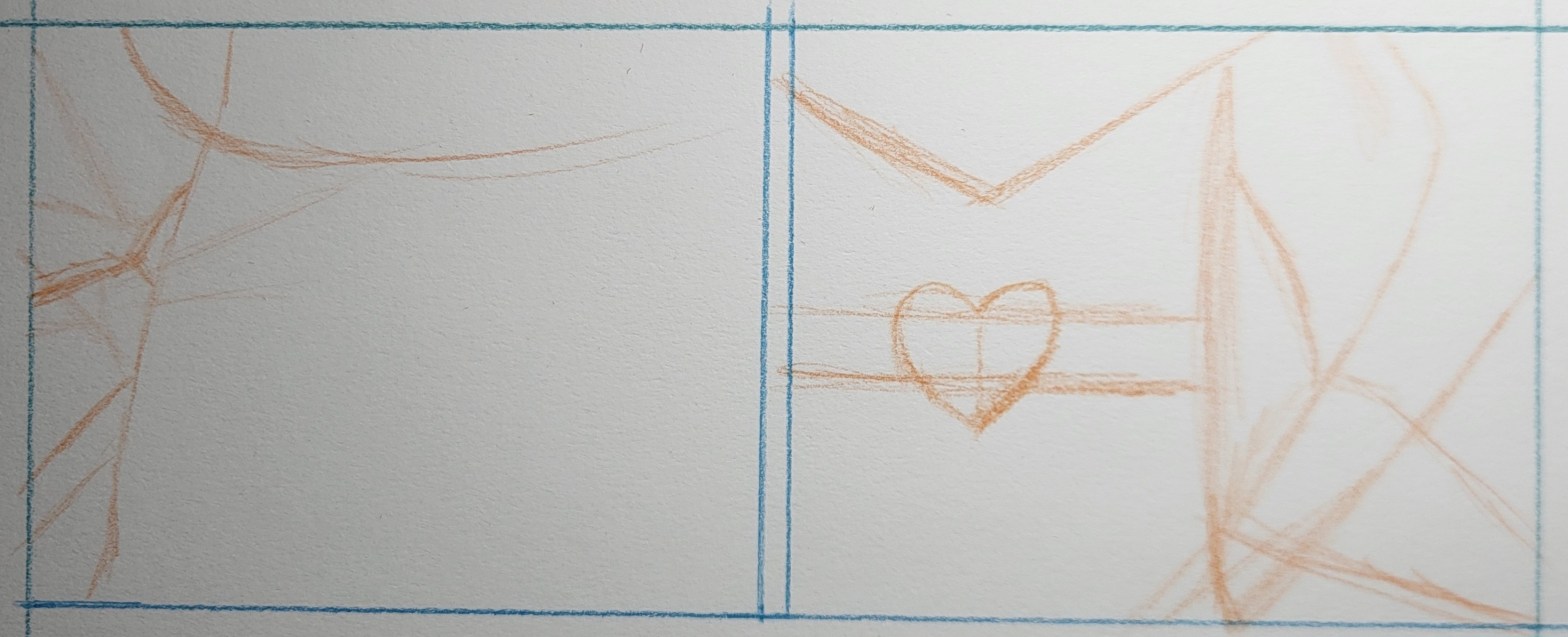
I am near the end of the pencils for my zine! I expect to be getting the pages scanned in this week, and then I’ll be able to start the digital processes. It’s exciting. What’s not exciting is that after this week, we’ll be getting seven trucks a week through Christmas. That means more work overall, that I’ll be going to work an hour earlier than normal, and I no longer have my schedule guaranteed. The fact that anyone who works retail likes Christmas will always be a mystery to me. It’s such a harsh, grueling thing we go through every year, and I can’t understand how I have coworkers who are excited to go turn their homes into Santa’s workshop. It’s like getting beaten by mobsters with bats and then rushing for a chance to play baseball.
But enough about that, because today, I’m wrapping up my Godzilla Heisei rewrite series with Godzilla vs. Destoroyah. This movie wrapped up the series, telling the tale of Godzilla’s death. Fun fact: Among the ideas considered for this seventh film was multiple iterations of Ghost Godzilla, the ghost of the first Godzilla returning to fight the Heisei Godzilla. Among various creative issues, they decided against it because they didn’t want to do a third movie in a row that was Godzilla fighting a second Godzilla. That was the right call. Destoroyah looks cooler.
This movie remains a fan favorite, and it’s easy to see why. The concept and design of Destoroyah is impressive. He’s a giant demonic beast born when a Precambrian crustacean is mutated by the Oxygen Destroyer, the only weapon more deadly than an atomic bomb that was used to kill the original Godzilla in 1954. Godzilla is also going through meltdown in this movie, as his nuclear reactor heart is breaking down. If Godzilla were to die, then he would either explode and vaporize the planet’s atmosphere, or melt down to the Earth’s core like the most extreme China syndrome. Little Godzilla finishes his arc by growing into a proper, though not fully developed, Godzilla, dubbed Godzilla Junior. By the end of the movie, Godzilla Junior has absorbed the radiation released by Godzilla’s death to become a full adult Godzilla.
I have a fundamental problem with this movie, and you may have already noticed it: Godzilla is dying no matter what, so Destoroyah is blunted dramatically. One would expect Destoroyah’s Oxygen Destroyer beams to melt Godzilla down to the bone with every blast, but it doesn’t do more than a generic laser. He’s also not particularly powerful or tough compared to other enemies. The metaphorical power of Destoroyah can’t be understated, yet the actual themes are glossed over, and he doesn’t even look like Godzilla’s deadliest foe. In the end, Destoroyah is killed by human weapons without much trouble. All of this has to be the case because they want to play out the meltdown scenario and see Junior take up the mantle. Godzilla can’t die by Destoroyah’s breath because then Junior can’t inherit anything.
The meltdown story precludes the power and meaning of Destoroyah before he even appears on screen, and simultaneously complicates the stakes of the film. Godzilla is always the deadly menace, and now it appears that he’s going to destroy the world no matter what. That’s a guaranteed fact with a ticking clock, regardless of anything else. That’s the main concern. Destoroyah brings back concerns about the Oxygen Destroyer as a scientist has once again uncovered the technology necessary to create the weapon. The fear is that if anyone were to make an Oxygen Destroyer, it would create an arms race more dangerous than the nuclear arms race; if one were ever used on land, it would be even more deadly and disastrous than an atom bomb. At the beginning, there are people begging this scientist to reconsider his research so that a weapon can’t be made, and then they come begging him to make one because it’s the only way to kill Godzilla before he melts down. Then Destoroyah appears. He initially is presented as an ultimate evil humanity has to fear, but of course the plan becomes to get Godzilla to fight Destoroyah so that they can use the Oxygen Destroyer to kill him without having to make one. Do we want this weapon, or not? Is Destroyah the enemy, or humanity’s only hope? No one is sure at any point in the film.
That’s the real issue. The movie is about staring down the literal apocalypse, and no one seems all that bothered by it. As presented, the choices are either for humanity to doom all life on Earth to die because of its past sins (Godzilla being our nuclear legacy and the inevitable Armageddon it brings on), or prolong our life by making something even worse and continuing to escalate the level of casual annihilation. Destoroyah is the product of humanity’s death drive that the original film spoke of, coming out of the darkness even if we try to suppress it. His appearance should spell out for people that there’s no hope for the future; either we die by Destoroyah’s breath, or we make something even more deadly than an Oxygen Destroyer to kill him, which then gets used against humanity or spawns its own monster, and so on. The fact that anyone is looking to Destoroyah as a potential hope for humanity’s future is so incredibly bleak, yet it’s accepted so readily and with so little pushback.
A few characters do stand against the Oxygen Destroyer approach, but they never say the full thought. The scientist who rediscovers it blasts through controversy by claiming science must progress no matter the cost, and that humanity can use the tech in beneficial ways; he literally banks his hope for the future of his tech on his naïve assumption that no one wants to make an Oxygen Destroyer right now. Towards the end, someone makes the comparison to nuclear energy, and it’s too little, too late. That’s the thing that the entire Heisei series has been circling, from the first entry in ’84 when Godzilla is brought back to Japan after thirty years by the presence of nuclear energy reactors. Godzilla’s death here speaks to concerns about such reactors, rather than nuclear bombs. Trying to recreate that path with the Oxygen Destroyer, but for super light oxygen tanks, is…well, you know. I don’t want to speak for Japan, especially since I’m not versed on the history of support and opposition to nuclear power plants, but one can easily see the argument against using the technology in the one country to suffer a nuclear attack. It seems like that was the starting point for this series of films. Here we are, seeing Godzilla be the embodiment of that argument, and some bozo is making it again for an even deadlier weapon, and the people in power turn to it for hope. How does everything end up ok?
In the film, the answer is the Super X-3, the newest anti-Godzilla weapon. Rather than using explosive weapons, it uses freezing technology to make ice missiles and ice lasers to freeze Godzilla. The plane casually cruises through Godzilla’s empowered atomic ray like it’s nothing and freezes a several-hundred degree Godzilla, then goes back to base without bothering to check if the job is done. It later reappears to fight Destoroyah, who’s weak to the cold, and is able to kill him immediately and without issue. The X-3 finishes its job by lowering Godzilla’s temperature as he dies so that he wouldn’t melt through the Earth. It’s an extremely convenient weapon that solves all of their problems with no stumbling blocks or hiccups along the way, and it’s a weapon they already have on hand before anyone has heard of either of these threats that it’s perfect for solving. With it, humanity can get rid of Destoroyah without making a deadlier weapon, and Godzilla can fully melt down without destroying the Earth.
In other words, the Super X-3 is a fantasy to hide from the consequences of this scenario. It’s cowardly and makes this tense story very slack. This is where I’ll start talking about what I would prefer to play out. The Super X-3, like its previous counterparts, should be a failure. They cram on hastily made freeze lasers, and it gets blown up because no one could account for the increase in power Godzilla is seeing in his dying days. Not only is this consistent with the themes of the Super X series, that we can’t fight or shoot our way out of these problems with wishful techno-thinking, but it furthers the recent experiences humanity had with MechaGodzilla and MOGUERA. As a reminder, MechaGodzilla explores the same themes of escalating arms races as Destoroyah, and MOGUERA’s heroic persona speaks to how you can’t use the same deadly tech for beneficial means. Having us finally reach that childlike conclusion successfully is out of the question, for me.
Instead, Godzilla kills Destoroyah on his own. Our current dystopia will always trump an imagined future of terror, because it’s already here. We can still get the cool images of Godzilla melting as he dies because his healing factor is breaking down and Destoroyah has been melting him with his breath, like what should be happening. Early in the fight, we see Godzilla healing up the damage, since sprays of the stuff can’t fully wipe him out, but over time the healing is wrong, and then it stops. After defeating Destoroyah, Godzilla continues to melt away, which threatens to ignite his reactor heart. Then Junior absorbs all of Godzilla’s radiation, such that his reactor goes down as it’s being melted. This keeps the basic structure of the conflict between the monsters and the desired ending without dampening or downplaying the nature of the events. It also is a very quick way of replaying the conclusion of the original movie, reminding us that the future will always have that possibility of nuclear annihilation as long as we hold onto our weapons and our hubris.
Of course, with just changes to the monster fighting, we would come out of that movie thinking that the Oxygen Destroyer did solve all of our problems. The other big change needs to be a much more resolute and forceful rejection of the Oxygen Destroyer. Someone needs to directly voice the opinion that if there’s nothing we can do to stop Godzilla’s meltdown, then the Earth should be left to its fate. Making an Oxygen Destroyer would be repeating the cycle that will inevitably lead to this same position. If our only hope is to make increasingly deadly weapons, then we’re doomed anyway. Of course, that’s a dark and cynical outlook, but one that has a logic behind it and that a lot of people can understand and empathize with. I would also like there to be more direct comparisons between making OD tech for beneficial means and the folly of making nuclear power plants, but I understand if that’s not doable for them, given Japan’s reliance on nuclear power; the “let fate play itself out” perspective is sufficient.
This is where Miki Saegusa can have her big moment for the finale. In this movie, she’s once again pushed around by everyone else’s agenda until she’s forced to do a terrible thing she disagrees with because it’s “for the best.” That general storyline can and does still work for her, but she needs to evolve here from being the humanizing agent to being the hopeful voice of the future. After all, she was first introduced as the nonviolent way to deal with Godzilla. She initially failed, and so like with so many diplomatic strategies, the world gave up on her mission. In this movie, while she should also be against the Oxygen Destroyer, her real purpose is to be the optimist in the room. She’s the light that tells people we can overcome these challenges over time with concerted effort to change humanity.
She contrasts well with a college kid introduced in this movie. He wrote a paper predicting a Godzilla meltdown scenario, and is recruited to work with G-Force to help them guide this process. He’s a weird character, because he’s laidback and only joins so he can be near his crush, Miki, but then becomes an aggressive hardliner who fully believes his opinions trump everyone else’s, and ultimately spends no time with Miki. If the movie were amended so that Miki is the optimistic response, then she mediates the conflict between the doomsayers who would let the Earth die and the hardliners like that kid who want to charge ahead with bigger guns no matter what. She sees the hope for the future that no one else is willing to stand up for, either because they gave up in the face of death or they embraced the disaster waiting for us all. Her heartbreak in the conclusion is the emotional climax of the human drama, and her resilience should visibly inspire others to work for a better future.
That about does it for this movie, and so this series. Going through these has been really good for me. I’m reconnecting with my creative roots and reminding myself of the kinds of storytelling I want to do. I’m thinking about my own monster stories as we speak, and maybe I’ll be working on them once I’m finished with my current zine. You know, after I finally get a Switch 2 and play the new Pokémon game, which I can’t do until this zine is done.
 Life in the Gutters